
Mounted at 43cm as standard, adjustable for players and during tournaments to 48cm. Powder coated.
TIN SHEET METAL FOR COURTS
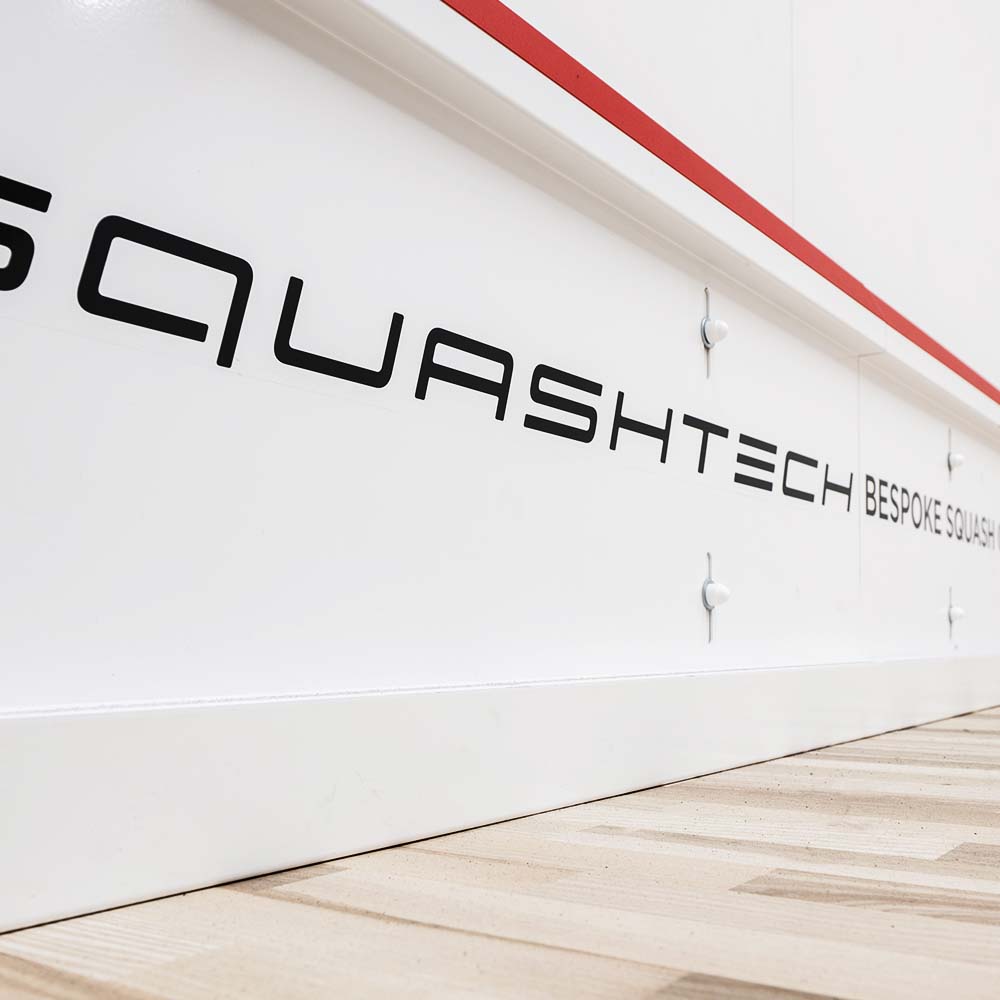
Adjustable TIN auto plate, made from 3mm thick curved aluminium sheet, meeting WSF requirements.
- Position: A TIN strip, also known as a 'tin' or 'auto plate'. , is a low metal slat placed on the front wall of the court, just above the floor.
- Function: The TIN strip plays a key role in the game of squash, determining the lowest point over which the ball must pass to score a point for the player. Contact between the ball and the TIN strip means a point is scored by the opponent.
- Dimensions: The TIN strip has standard dimensions, in accordance with WSF (World Squash Federation) regulations, to ensure consistency across all courts. This is essential for fair play.
- Construction: The TIN slat is typically made of aluminium, making it durable and resistant to regular ball contact. Its location on the front of the court makes it easy to clearly identify whether the ball has passed over the slat.
- Role in Scoring: Any touch of the ball with the TIN strip means a point is scored by the opponent. This is one of the key places on the court that determines scoring.
- Visibility: The TIN strip is usually painted a contrasting colour, making it easier for players and referees to monitor whether or not the ball has passed over the TIN strip.
- Adjustment: In its standard setting, the TIN bar is not adjustable. However, in some cases, particularly on practice courts, it may be possible to adjust its height to suit the difficulty of play.
The TIN bar is a fundamental element of the squash court structure, influencing the flow of play and providing a key reference point for scoring. Its low position makes it one of the most important aspects of squash strategy and tactics.
Components of our production
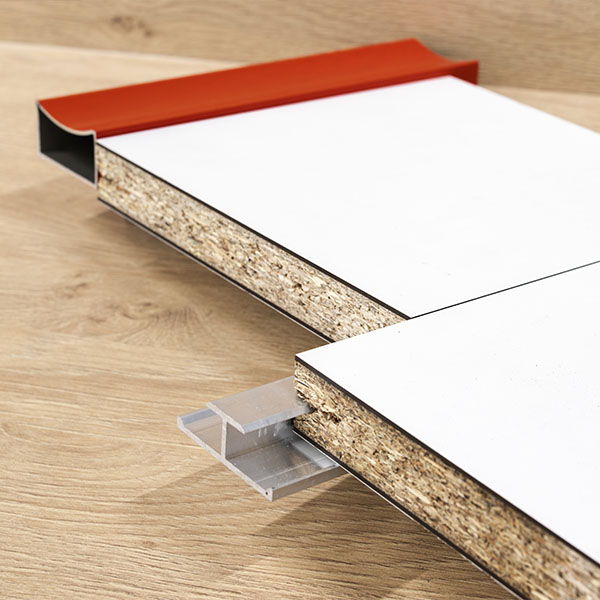
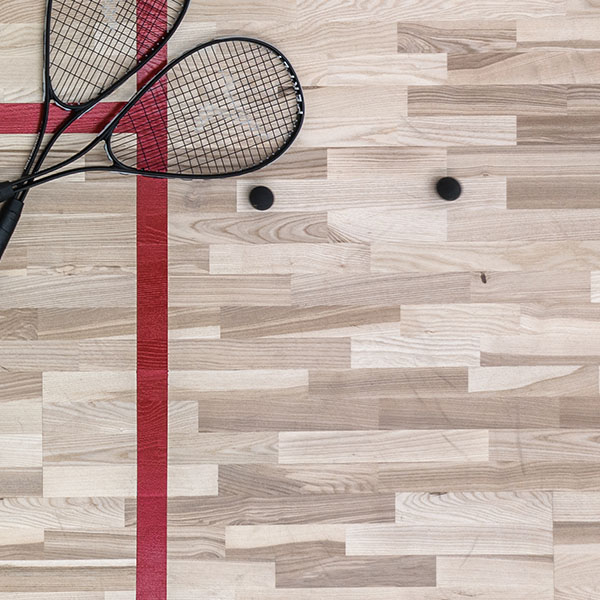


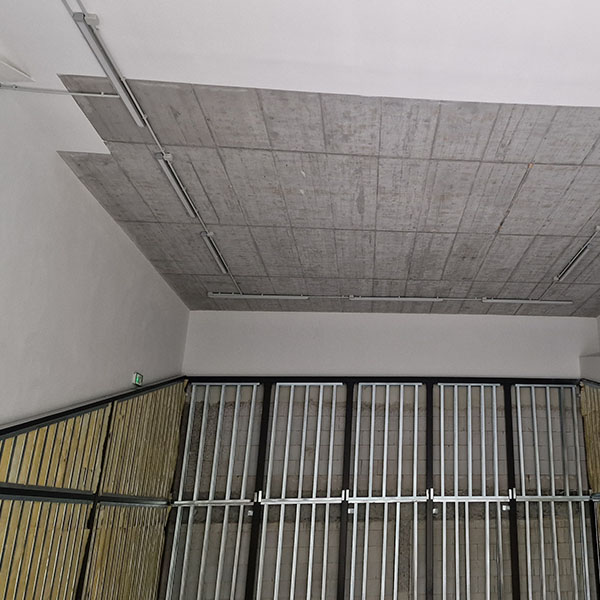

TIN strip — an important element of the front wall of the court and a precise reference point for the referee
The squash strip (TIN) is not just a piece of metal at the bottom of the front wall. In the professional SQUASHTECH system, it serves as a reference for scoring, stabilizes the edge of the playing area, and provides clear acoustic feedback on errors. Below you will find a technical overview of installation solutions, integration with wall panels, maintenance rules, and finish options that we recommend to investors planning to build or modernize a court.
TIN strip — material, geometry, and sound control on the front wall
The TIN sheet metal developed by SQUASHTECH has a bent profile that ensures rigidity and even shock absorption. The edges are chamfered and smoothed to eliminate sharp transitions at the junction with wall panels and sports flooring. In practice, this translates into:
- a uniform, “metallic” sound signal when hitting the TIN — the referee and players receive clear information, without reverberation and unwanted buzzing,
- suppression of local resonance thanks to support points and separating pads that disperse the energy of the ball impact,
- a constant reference line across the entire width of the wall, without local sagging.
In tournament play, it is not only the TIN strip itself that is important, but also its “acoustic environment.” That is why we use spacers with controlled hardness, and after installation, we perform a test listening and spot tests in several places across the width of the wall to confirm sound repeatability.
TIN visibility — powder coating and contrast for referees and players
The squash sheet should be clearly visible to the side referee and the audience. In practice, we achieve this through:
- a matte powder coating with high contrast to the front panels — reduces light reflections from the court lighting,
- long-term color stability (RAL palette on request), so that even after years of use, the TIN remains a clear reference point,
- maintaining a constant thickness of the paint layer — without “steps” at the junction with the paint line on the panels.
In facilities with video transmission, we suggest neutral, non-glossy coatings that can withstand strong studio lighting and do not cause overexposure of the image in the lower autumnal area.
Integration with the front wall system and sports floor
The strip is the point of contact between three systems: the front panels, the floor, and the mounting to the structure. A properly designed mounting detail:
- ensures a constant, narrow expansion gap between the TIN and the panel — the gap compensates for material movement and prevents stress from being transferred to the paint coating,
- does not create a height difference between surfaces — the ball cannot “stop” on the edge,
- protects the edge of the floor with a discreet seal under the TIN, which limits the penetration of moisture and dust.
In courts based on SQUASHTECH PANELS TECHNOLOGY, we select fastening patterns so that the impact loads are not concentrated on individual rivets or screws. The structures used distribute forces along the profile, and the fastening points are spaced at regular intervals, which minimizes the risk of loosening during intensive use.
TIN installation and adjustment — acceptance procedure
Each squash strip undergoes the same implementation process at the facility:
- Laser marking of reference lines — with reference to the finished sports floor and correction of local flatness deviations.
- Installation of supports with axis control — so that the TIN profile lies in one plane across the entire width of the wall.
- Setting the working height in adjustable versions — according to the investor’s specifications and the nature of the competition.
- Mechanical tests (a series of ball impacts at random points) and acoustic tests — we look for possible “dead” sections and correct the clamps.
- Acceptance report with an entry in the service documentation — this facilitates subsequent periodic inspections.
For multi-court halls, we implement a serial calibration procedure to ensure that all playing fields provide identical sound reception. This is important from the perspective of fair conditions throughout the facility.
Maintenance of TIN car sheet metal — cleaning, inspections, coating retouching
Car sheet metal works closest to the contamination zone — dust, chalk, rubber dust from soles. To maintain full sound clarity and aesthetics:
- clean the surface regularly with a soft microfiber cloth and a neutral agent for painted surfaces,
- avoid abrasive preparations and aggressive solvents that can dull or etch the coating,
- check the tightness of the fasteners during periodic inspections; looseness can be a source of unwanted “ringing,”
- in case of spot impacts with a racket — perform paint retouching in accordance with the color chart; for more extensive damage, we recommend disassembly and workshop repair.
We encourage you to have an annual service inspection covering the TIN, front panels, and bottom line of the table. This is the fastest way to keep the facility in tournament condition and avoid costly downtime.
How to prevent installation errors when installing a TIN?
Proper installation of TIN car sheet metal is crucial for the durability of the structure and the quality of play. Even slight deviations in level, overly rigid connections between materials, or an inappropriate type of coating can affect the acoustics and comfort of players. Therefore, each stage of installation requires precise control and the use of dedicated SQUASHTECH system solutions. The most common errors and recommended preventive measures are presented below.
Problem | Effect | Solution |
|---|---|---|
Inaccurate leveling | Unevenness causes differences in ball bounce and disruptions in play | Installation at distances, laser control after each stage |
No material separation between TIN and panel | Squeaking and vibration transfer to the wall structure | Use of spacers with repeatable hardness |
Coating too hard or shiny | Reflections make it difficult for referees to judge ball contact with the sheet metal | Use of powdered, matte paints of consistent thickness |
Discontinuity of the bottom line at panel joints | Disruption of visual consistency and greater wear on the edges | Planning of joints outside areas of intense impact |
SQUASHTECH installation teams work to rigorous quality control standards, ensuring that each court has a uniform level of workmanship, acoustic stability, and full compliance with WSF requirements.
TIN strip variants — resistance, acoustic package, and RAL colors
TIN versions with different characteristics are available:
- TIN with increased abrasion resistance — for facilities with very high user traffic,
- TIN with an extended acoustic package — for halls where sound clarity in noisy environments is a priority,
- TIN in club colors (RAL palette, shades similar to the color scheme of the walls) while maintaining a clear contrast — for the image consistency of the facility,
- TIN with a dedicated strip masking the expansion gap — aesthetic solutions in representative facilities.
We work with design offices at the concept and execution stages — we provide CAD/BIM details, installation recommendations, and specification guidelines so that the TIN strip is an integral part of the entire front wall system.
Squash auto sheet metal — configurations for different types of facilities
TIN auto sheet metal performs the same function regardless of the level of competition, but its technical parameters and installation method can be adapted to the nature of the facility. Some solutions are suitable for commercial courts, while others are better suited to municipal halls or tournament arenas, where acoustics and visibility for referees are also important. Choosing the right TIN configuration allows you to maintain a high standard of play, durability of components, and user safety for many seasons.
How to match car sheets to other SQUASHTECH components?
In the complete SQUASHTECH court system, the TIN strip has been precisely integrated with the other structural elements. It works with WSF-accredited SQUASHTECH PANELS TECHNOLOGY wall panels, which guarantees uniform surface rigidity and the correct level of ball rebound. The connection with the sports floor with controlled deflection maintains a constant contact geometry and prevents unevenness in the lower aut zone. The whole is complemented by a lighting system designed for even light distribution, which eliminates reflections on the edge of the front wall. Such matching components create a coherent system that ensures playing comfort, stability, and easy maintenance, while allowing the investor to keep the facility in optimal technical condition at low operating costs.
Why SQUASHTECH?
- Experience gained from hundreds of projects and repeatable control procedures,
- complete technical documentation of the component and clear service guidelines,
- design support from concept to acceptance and facility training.
If you are planning a new court or modernization, please contact us. We will propose a TIN strip configuration tailored to the purpose of the facility, work schedule, and budget.
SQUASHTECH — precision in every detail of the front wall.

